
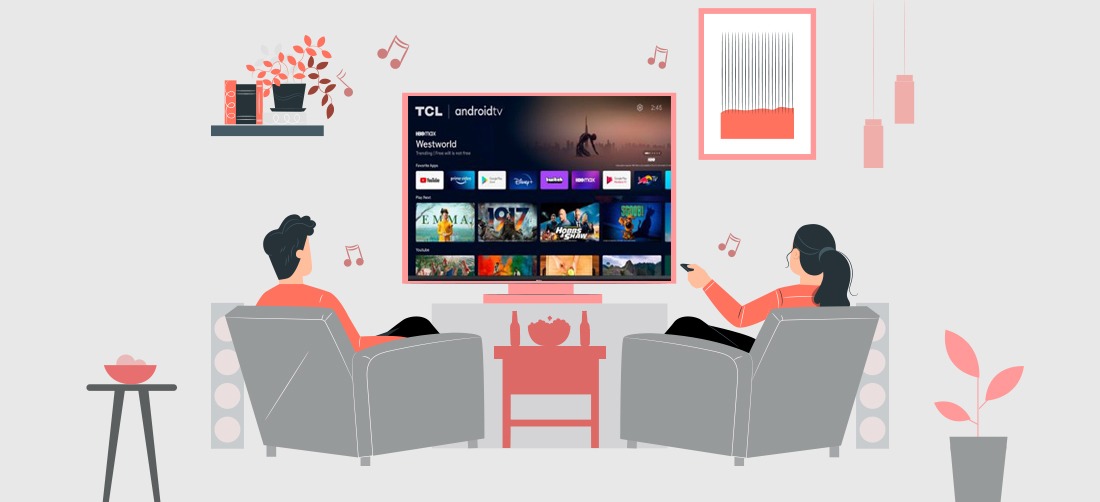
OTT platforms have rewritten the rules of attention. Viewers no longer tolerate interruptions the way they once accepted commercial breaks on linear television. Instead, they expect advertising to feel intentional, relevant, and occasionally even entertaining. The brands that succeed here treat the medium as a creative canvas rather than a distribution channel. What follows are distinctive approaches that have demonstrated measurable lifts in engagement by respecting the viewer’s time while still delivering commercial value.
When the Ad Becomes a Natural Extension of the Episode
One of the most effective techniques involves embedding brand messages so tightly into the narrative fabric that they register as storytelling rather than interruption. Consider a premium drama series centered on a high-stakes corporate negotiation. Rather than cutting to a conventional spot, the platform inserts a 15-second sequence in which a key character opens a specific laptop brand during a pivotal boardroom moment. The product appears in the exact lighting and camera language of the surrounding scenes. Viewers later report higher brand recall because the product felt like part of the world they were already invested in. Engagement metrics rise when the advertisement refuses to break the spell of immersion.
This method works especially well on subscription services that allow limited commercial inventory. The scarcity itself becomes an advantage: fewer ads mean each one can carry more creative weight. Production teams collaborate early with showrunners so that product placement and narrative beats evolve together. The result is an experience that feels curated rather than sold.
Interactive Layers That Reward Curiosity
Another powerful direction transforms passive watching into light participation. On certain free ad-supported streaming services, a short-form comedy special includes an on-screen prompt that appears for six seconds after a punchline. Viewers can select one of three reaction options using their remote. Choosing an option unlocks a brief, exclusive epilogue that continues the joke. The brand logo appears only in the final frame of that epilogue, framed as a thank-you rather than a hard sell.
Data from these campaigns consistently show higher completion rates and secondary social sharing. People who interact are more likely to remember the brand the next day and to mention the experience in conversation. The interactivity never demands significant effort; it simply offers an optional moment of agency. In an environment where most content remains strictly linear, even modest choice feels novel and therefore sticky.
Sequential Storytelling Across Multiple Viewing Sessions
Some of the strongest engagement gains come from treating advertising as a serialized narrative rather than a single exposure. A financial services brand developed a four-part micro-story that unfolded over consecutive ad slots during a popular true-crime series. Each installment lasted under twenty seconds and advanced a single character’s decision about whether to take a calculated risk. The final chapter resolved the tension and introduced the product as the tool that enabled the outcome.
Because the story progressed only if the viewer continued watching the series, the campaign created a subtle incentive to return. Completion rates for the full sequence outperformed traditional single-spot campaigns by a noticeable margin. More importantly, brand consideration scores improved among those who saw all four chapters. The technique borrows the cliffhanger logic that streaming platforms already use to retain audiences and applies it to commercial messaging.
Contextual Relevance That Feels Almost Invisible
Highly targeted creative still matters, yet the best examples go beyond basic demographic matching. One outdoor apparel brand partnered with a nature-documentary platform to serve different creative treatments based on the specific episode being watched. Viewers watching an episode about high-altitude mountaineering saw a short sequence filmed on similar terrain, while those watching a coastal conservation episode received a version shot along comparable shorelines. Neither version interrupted the documentary’s tone; both simply continued the visual conversation already underway.
The approach relies on real-time content signals rather than user profiles alone. Engagement rises because the advertisement never feels mismatched. Viewers report that the brand “understood the moment,” a perception that strengthens affinity more effectively than any overt claim of shared values.
Shoppable Moments That Respect Narrative Pace
Commerce integration has matured beyond the early experiments that froze the screen with product carousels. A more refined version appears in lifestyle and cooking content. During a travel series episode focused on regional markets, a five-second interactive window appears only after the host has finished describing a particular ingredient. Viewers who choose to engage can add a related product to a digital cart without leaving the stream. Those who ignore the window simply continue watching uninterrupted.
The key design choice is timing. The interactive element never appears during dialogue or emotional peaks. It surfaces only in natural breathing spaces. Brands that follow this discipline see higher conversion rates among engaged users and lower drop-off among those who prefer pure viewing. The advertisement becomes an optional extension rather than a forced detour.
Emotionally Resonant Short Films That Stand Alone
Occasionally the most effective OTT advertising abandons traditional product demonstration altogether. A global wellness brand commissioned a three-minute short film that played as a mid-roll during a popular self-improvement series. The film told a complete emotional story about recovery and small daily rituals; the brand name appeared only in the closing credits. Because the piece delivered genuine cinematic quality, many viewers watched it to the end and later sought out the brand independently.
This strategy succeeds when the creative team prioritizes emotional truth over message points. The advertisement earns attention by offering value in the same currency the surrounding content uses: feeling and insight. In an attention economy that punishes anything that feels extractive, generosity becomes a competitive advantage.
These approaches share a common thread. They treat the viewer as a person already engaged in a meaningful experience rather than an interruption waiting to happen. The most successful OTT advertising does not fight for attention; it earns a place inside the attention that already exists. As platforms continue refining their advertising products, the brands that will stand out are those willing to invent new forms of relevance instead of simply transplanting old formats into a new screen.
